Eat Sleep Game Repeat: Turning a Funny Gaming Quote into Custom Merchandise
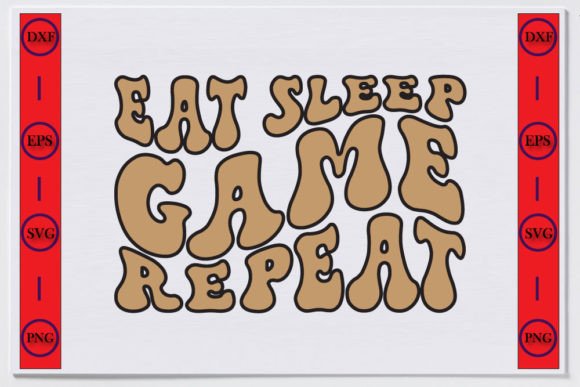
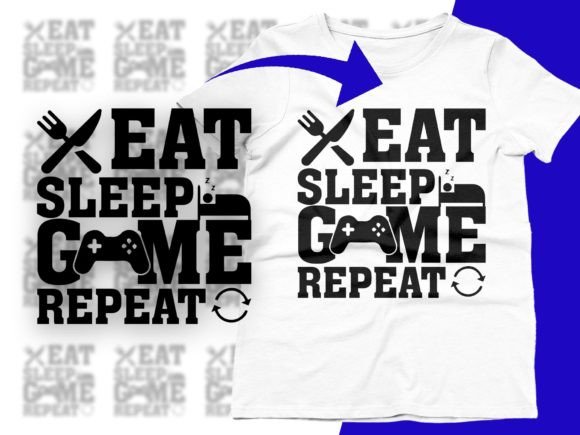
Every niche has its rallying cry, and for gamers, few phrases sum up the lifestyle better than “Eat Sleep Game Repeat.” This simple, often humorous quote has been printed on t-shirts, engraved on mugs, and stuck onto laptop cases for years. Now, a ready-made digital design asset — specifically an SVG and PNG pair — makes it remarkably easy to bring that phrase onto physical products using a Cricut, Silhouette, or even a basic home printer. The product isn’t just a piece of clip art; it’s a crafted file set designed to slot directly into a maker’s workflow, whether that’s a small business producing merch or a hobbyist personalizing a gift. This article takes a practical look at what’s actually included, how the files perform in real-world cutting and printing scenarios, and who stands to benefit most from adding this asset to their creative library.
What Exactly Is Included in the Design Package
Understanding the file formats immediately tells you whether this asset will work with your equipment. The package includes three items, though two of them are variations of the same core export:
- 1 SVG file – Scalable Vector Graphics, the standard for cutting machines. It retains crisp lines at any size and can be edited further in vector software if color tweaks or layer separation is needed.
- 2 PNG files – Both are 300 dpi with a transparent background. Typically, one might be a black version and the other a white or color variation, but even if they’re identical colorways, the transparency makes them immediately usable for sublimation, print-then-cut, or direct printing onto cardstock without a white box surrounding the text.
The presence of both vector and raster options gives a lot of flexibility. The SVG will be the go-to for anyone with a cutting machine because it eliminates manual tracing and the jagged edges you often get when converting a low-resolution image. The high-resolution PNG, on the other hand, is print-ready and won’t pixelate on a standard 8.5×11 printout. One note for discipline: always check that the SVG text has been converted to outlines or that you have the original font license if you plan to edit the lettering further. In most ready-to-cut designs like this, outlines are already set, meaning you can scale up or down without ever worrying about missing fonts.
Practical Strengths That Go Beyond the Obvious
A catchy gaming quote is easy to find. What makes this particular asset useful is the balance between simplicity and adaptability. The phrase itself falls into a sweet spot: it’s clean, it’s widely recognizable within gamer culture, and it doesn’t rely on a specific game or trademarked universe. That universality is a huge advantage for sellers on platforms like Etsy or for streamers who want to avoid copyright entanglements while still connecting with an audience.
Beyond the content, the file construction deserves attention. The SVG format typically means the design is grouped and layered logically. In Cricut Design Space, a well-structured SVG will import with distinct elements — maybe the word “Eat” on one layer, “Sleep” on another, and so on — so you can resize sections individually or change colors without having to mess with compound paths. While not every seller organizes layers identically, the fact that the design is offered as a genuine SVG (not a PNG renamed as SVG, a common pitfall) already sets a base level of technical quality.
The transparent PNG’s 300 dpi resolution is equally important. For card makers looking to print directly, 300 dpi ensures text stays sharp even under close inspection. The transparent background means you can superimpose the quote onto a patterned background or a photo without a clumsy white rectangle breaking the composition. In practical terms, this single PNG can become a sticker sheet, a topper for a gift tag, or a decal for a phone case without any extra clean-up.
How It Fits into a Cutting Machine Workflow
For Cricut and Silhouette users, the journey from file to finished product typically follows a few predictable steps, and this asset maps neatly onto each stage. The SVG is designed to be uploaded directly. Once in the software, you’ll likely want to adjust sizing. Because it’s vector, increasing the width from 8 inches to 20 inches for a large wall decal won’t degrade the edges.
If you’re intending to make a t-shirt with heat transfer vinyl (HTV), remember to mirror the design before cutting. The cleaner the SVG paths, the easier the weeding process becomes — sharp corners on letters like “E” and “G” won’t tear or lift the surrounding vinyl if the file was created with adequate node spacing. Anecdotally, well-built quote SVGs cut cleanly on cardstock, permanent vinyl, and iron-on material alike. You may still need to adjust pressure settings for heavy cardstock or glitter vinyl, but that’s a machine calibration task rather than a reflection on the design itself.
For crafters who use the Print Then Cut feature in Cricut, the PNG becomes essential. You can import the transparent image, add a colorful background in Design Space (or better yet, in an external program like Photoshop before importing), and then send it to the home printer with registration marks. The cut sensor will follow the outer boundary of the design, but because the PNG has transparent edges, you also retain the option of adding a custom offset or bleed around the text. That’s a distinct benefit over a flattened JPG that locks you into a rectangular cut shape.
Real-World Applications and Audience Fit
One of the reasons this type of asset maintains long-term relevance is that it plugs into many different creative micro-businesses. A small sampling of practical uses illustrates the breadth:
- Custom apparel: T-shirts, hoodies, or tank tops for personal gaming groups or esports watch parties.
- Drinkware: Mugs and water bottles featuring the quote, either via permanent vinyl or sublimation transfer using the PNG.
- Home decor: Framed prints or canvas art for a game room, with the quote cut out of vinyl and applied to a painted canvas.
- Stationery and cards: Greeting cards for gamer friends, printed at 4×6 or A5 and paired with envelope sets.
- Stickers and decals: Laptop skins, car window decals, or planner stickers using the PNG for print-then-cut or the SVG to cut colored vinyl directly.
The audience extends far beyond teenage gamers. Serious hobbyists in their 30s and 40s who grew up with video games often appreciate understated, clean typography over flashy graphics. Small business owners who run pop-up shops at conventions or on Etsy can produce consistent, low-cost inventory using a single design. A streamer can brand their backdrop or merchandise without a huge design budget. Educators and community organizers running gaming clubs might use the design for posters or award certificates. The asset also fits neatly into the workflow of graphic designers who occasionally need a ready-made quote for client projects — they can grab the SVG, tweak the colors to match brand guidelines, and move on, saving an hour of typesetting from scratch.
Assessing Quality, Consistency, and Reliability
When buying digital design files, you’re not just paying for the artwork; you’re paying for the certainty that it will work. A few quality indicators stand out with this set. The combination of SVG and PNG suggests the creator understands the difference between cutting and printing uses. The 300 dpi declaration is specific and verifiable — simply open the PNG in any image editor and check the dimensions. A 4000×4000 pixel PNG is large enough at 300 dpi to produce prints up to over 13 inches wide, which covers the majority of home printing and small format merch needs.
Consistency is harder to judge without opening the file, but reputable sellers of these types of assets typically ensure that the SVG uses clean compound paths, no stray nodes, and that the text is perfectly aligned. Misalignments are rare in simple quote designs, but they do happen — for example, if the letter “p” in “Sleep” extends below the baseline inconsistently. A quick quality check you can perform after purchase is to preview the SVG in Inkscape or Illustrator and scan for oddities. If the file imports smoothly and the letters cut without leaving tiny interior floaters (like the center of an “o” not being properly attached or cut separately), the design is reliable for repeated production.
There’s also the long-term value perspective. Unlike a trendy graphic that looks dated in a season, the phrase “Eat Sleep Game Repeat” has staying power. It’s been part of internet culture for over a decade and, much like “Keep Calm and Carry On,” it persists because it’s inherently adaptable. You can pair it with a retro game controller icon, a modern headset silhouette, or leave it standalone. That means you can reuse the same asset for years across different products, adding other elements as needed, without the core message losing its relevance.
Potential Limitations to Keep in Mind
No asset is perfect for every scenario, and this one comes with a few inherent constraints. First, the design is likely a single-color or two-color text composition. If you need a highly layered, multi-color graphic with intricate shading, you’ll either need to modify the SVG heavily in vector software or layer vinyl manually. That’s not a flaw — it’s the nature of typographic quotes — but it does mean this asset won’t replace a full character illustration or a complex gamer collage. It works best as a focal point or a companion element, not as an all-in-one design system.
Another consideration is commercial licensing. The product description doesn’t always explicitly state whether the files can be used on physical products for sale. Most crafters intend to sell finished items, not the digital file itself. It’s wise to confirm that the license allows commercial use of the physical goods (e.g., selling t-shirts printed with the design). If you’re unsure, contact the seller. Using a design without clear commercial rights can lead to issues down the line, particularly on platforms that actively enforce intellectual property claims.
Weeding complexity is also worth mentioning. While the phrase is relatively short, words like “Game” include closed loops (the “a” and “e” counters) that can be finicky for beginners. A sharp weeding tool and patience solve this, but if you’re new to vinyl, you might want to practice on a smaller scale before cutting a 12-inch version. Similarly, for HTV, tiny details like the dot over the “i” can shift during pressing if not carefully placed. A tip is to increase the size slightly so those elements are more manageable.
Finally, while the transparent PNG is excellent for printing, it’s still a raster file. If you need to drastically enlarge the design beyond its native pixel dimensions for, say, a large banner, you’ll want to use the SVG instead, as the PNG will eventually lose sharpness if scaled up well beyond the original size.
Making the Most of the Asset: Practical Recommendations
Based on how similar designs perform in production environments, a few strategies can help you extract maximum value. If you’re using a Cricut, always **weld** the text in Design Space before cutting if you want the letters to stay connected as a single phrase — unless you intend to place each word individually. For Silhouette Studio, grouping is usually sufficient, but check the cut preview to avoid a fragmented word.
Think about substrate contrast. A black vinyl decal on a light mug works, but if you reverse the design (white vinyl on a black mug) you get a different aesthetic. The PNG with transparency makes it easy to mock up both options in a program like Canva before committing to materials. For card makers, printing the PNG onto vellum or parchment paper creates a subtle overlay effect that’s popular in gaming-themed stationery sets.
Pairing assets is also an underutilized approach. The quote alone is strong, but you can combine it with other compatible SVGs — a geometric pattern for the background, a subtle controller icon below the text — to create a more complex design without sacrificing the original’s clean lines. Provided you respect any layer limits in Design Space, this modular approach extends the lifetime of the asset considerably.
If you’re a small business owner, consider batch production. You can cut multiple vinyl copies of the same design in one go, then apply them to diverse products (pouches, notebook covers, glassware) with minimal extra setup. The consistency of the SVG ensures each cut is identical, which is crucial for brand cohesion across a product line.
From an organizational standpoint, storing the file set in a well-labeled folder with the purchase date and license terms written in a text file saves time later. Nothing slows down a project like hunting for the original download link or wondering whether you’re allowed to use the graphic on a commercial project.
All these practices assume a basic level of crafting competence, but they don’t demand advanced design skills. That’s perhaps the core advantage of such a straightforward asset: it lowers the barrier from idea to tangible item, letting creators focus on production and presentation rather than wrestling with typography from scratch. Whether you end up making a single birthday gift or a whole run of merchandise, the file’s structure supports repeatable, clean results that align well with the professional standards buyers and recipients expect.