Gaming Website Exploration: Finding Design That Speaks to Every Player
Building a website for a gaming project isn’t just about picking dark colors and neon accents. Whether you’re launching a studio site, curating game reviews, hosting tournaments, or chronicling your own adventures, the way your pages look and behave shapes trust before a single word is read. “Gaming Website Exploration” describes the process of studying layouts, typography, functional patterns, and visual storytelling that connect a digital space with its audience—often starting from a well-considered design foundation and then making it your own.
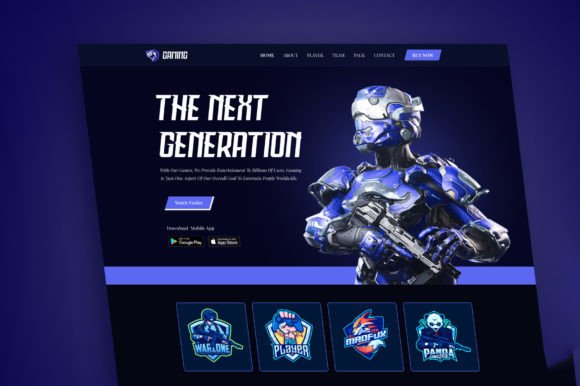
What makes gaming-focused design different isn’t only flashy style. It’s the way interaction, readability, and brand personality collide. A meticulously crafted template that runs on a stable 1440px‑wide container can give you the dramatic, cinematic breadth players expect, while sticking to fonts that load fast and scale gracefully keeps the experience smooth on any device. When those building blocks are documented clearly and built to be reshaped without pain, exploration stops being guesswork and becomes a creative jumpstart.
What Gaming Website Exploration Actually Means
This journey starts with a simple question: “How do I translate movement, community, and emotion into static and interactive web elements?” You might study navigation patterns that feel natural for live score updates, hero areas that hold video teasers without drowning in code, or card layouts that showcase game titles beautifully. Gaming Website Exploration isn’t one-size-fits-all—it’s the deliberate act of testing what works for your specific flavor of gaming content, whether that means a one‑page esports event hub or a deeply layered MMO wiki.
For some people, exploration means adapting an existing, well‑structured foundation that already solves countless technical headaches: cross‑browser consistency, responsive behavior, accessibility considerations. For others, it’s about prototyping from scratch. But in both cases, the goal is the same—a website that feels alive and on‑brand without burying visitors under slow load times or clunky mobile views.
Where a 1440px‑Wide Canvas Changes the Game
A fixed‑width container built around 1440 pixels does much more than look tidy on a large monitor. It gives you breathing room to display rich media—game trailers, high‑res screenshots, tournament brackets—while keeping a readable measure of text. In gaming communities where visual punch often drives first impressions, this canvas size tilts the balance toward immersion. Landscape key art doesn’t end up squeezed into a tiny column; character galleries feel spacious; call‑to‑action buttons can sit comfortably beside lore descriptions without feeling cramped.
Not every visitor will appreciate the nuance, but those who build gaming brands know it makes a difference. When you can rely on a stable 1440px base, you spend less time fixing breakpoints and more time tuning the exact atmosphere you want. From an editor’s perspective, consistent width also makes it easier to keep visual rhythm across pages—a major plus for publishers who run weekly gaming roundups or content-heavy blogs.
Typography Without Barriers Thanks to Free Google Fonts
Fonts carry huge emotional weight in gaming design. The right sans‑serif can echo futuristic e‑sport energy; a sturdy slab serif might anchor a retro‑inspired shop. One quiet advantage of using free Google Fonts in a design exploration is that you get variety without licensing headaches or hosting burdens. They render reliably across browsers, support multiple languages, and load efficiently—all while offering enough personality to make headings feel distinct.
This matters differently across audiences. A solo blogger covering indie games might value the zero‑cost safety net; a marketing team at a mid‑sized studio will appreciate the performance footprint and easy brand alignment. Meanwhile, a hobbyist building a fan site for the first time can experiment with pairings without paying for typefaces. In every case, the fact that documentation often includes which Google Font families are pre‑wired makes the exploration tangible—you can see how Merriweather handles body text next to a Montserrat‑styled navigation, then swap them out in minutes if the mood doesn’t fit.
The Hidden Value of Good Documentation
Many designers underestimate how much friction a poorly documented design file introduces. If you’re a freelance web developer trying to deliver a polished gaming client project in under two weeks, clear notes on which sections control which parts of the page can save entire days of reverse‑engineering. Educators teaching web design can walk students through the structure step by step, turning a finished template into a learning tool. Even seasoned creators get a boost: knowing exactly where to change a color variable or how the grid responds at intermediate widths lets them iterate faster.
Good documentation transforms “Gaming Website Exploration” from a passive browsing activity into an active, hands‑on exercise. It invites you to understand the reasoning behind layout choices and then adapt them fearlessly. When a design comes with explicit guidance on how to swap assets, modify navigation, or adjust content without breaking the flow, the learning curve feels more like a workshop than a manual.
How Beginners Reshape a Strong Foundation into Something Personal
Not everyone exploring gaming website design comes from a coding background. A passionate gamer who wants to share retro reviews or build a small streaming community may feel intimidated by raw HTML and CSS. In those moments, a well‑organized starting point that’s labeled “easy to edit and customize” becomes a gateway. They can change a headline, drop in their own Twitch embed, recolor a section, and see instant results—all while the underlying bones remain solid and standards‑compliant.
For this group, practical outcomes matter most: Can I launch something tonight that looks credible? Will it hold up when I share a link in a Discord server? Exploring design with a ready‑made, 1440px‑based layout that uses familiar Google Fonts often answers yes to both. Over time, as beginners tweak more and learn what each class does, the line between customization and genuine understanding starts to blur—exactly the kind of growth that turns a one‑off project into a lasting skill.
Professional Creators Seek Speed, Scalability, and Brand Consistency
Agencies and independent designers who handle multiple gaming clients run a different calculation. The exploration phase for them often involves evaluating how quickly a base layout can be skinned to reflect dramatic identity shifts—one month it’s a grimdark fantasy MMORPG; the next, a vibrant puzzle‑platformer. They scrutinize how reusable components behave under real content loads and whether the initial documentation covers edge cases like long hero text or zero‑state leaderboards.
Here, a smart 1440px container and a well‑documented, font‑flexible system reduce the risk of a build spiraling beyond budget. Editors and content managers also benefit: they can publish news posts, event pages, and player spotlights without requiring developer intervention each time. That ease of ongoing maintenance is often just as crucial as the upfront cost, making exploration not just a creative act but a strategic one.
Educators and Community Builders Turn Play Into Pedagogy
Gaming websites aren’t only for commercial studios. Educators who design game‑based learning portals, after‑school coding clubs, or history‑through‑gaming projects need trust and clarity above all. A site built on transparent design principles—font choices that aid readability, layouts that work on school‑issued tablets, navigation simple enough for younger learners—removes barriers. Documented, easy‑to‑edit structures let instructors quickly spin up class hubs without becoming full‑stack developers.
In these settings, the reliability of free, widely tested fonts and a responsive, generous layout size helps. A literature teacher might create a “choose your own adventure” hub using the same template a clan leader uses for raid scheduling. The exploration is about discovering how design can support a learning goal, not distract from it.
Small Business Owners Selling Merch, Gear, or Game Services
If you run an online store for gaming accessories, a physical arcade, or a coaching service, your website has to convey authority instantly. Shoppers inspecting a controller listing or booking a coaching session want assurance that the business is legitimate and the experience will be smooth. A visually busy, unpolished site can cost sales.
Here, exploration of gaming website design often comes down to subtle cues: ample white space provided by the 1440px container to prevent sensory overload, typography that reads cleanly on product description pages, and a predictable structure that speeds up checkout. When the underlying framework is well documented, integrating payment gateways or inventory widgets doesn’t force you to unravel the entire design. You can preserve the gaming spirit while meeting commercial expectations—proof that fun and function aren’t enemies.
Hobbyists, Streamers, and Fans: Expression Without Overhead
Not every gaming site needs to monetize or teach. Sometimes you just want a corner of the web that feels like home—a place to log your playthroughs, share screenshots, or showcase fan creations. For this audience, exploration is personal. The priority is how easily a design lets you swap in your own screenshots and stories without fighting broken alignment.
A solution that promises “easy to edit and customize” hits exactly this spot. When you can clone a starter, replace placeholder images with your own Nuzlocke team, and change the color palette to mirror your channel branding in an afternoon, the technology fades into the background. It becomes about your content, not about wrestling with code. The fact that it uses free, well‑known fonts means your visitors’ browsers won’t hiccup on display, and you can focus on building a following.
How to Decide If This Approach Matches Your Project
The wide world of gaming website exploration can be boiled down to a few personal questions. First, what does “done” look like for you? A live portfolio, a safe place to experiment, a client deliverable, a classroom resource? Next, consider your skill depth. Do you need a learning ramp, or are you looking for an efficient foundation that you can extend with custom scripts? Then think about maintenance—who will update the site, and how complex will that process be?
If you resonate with the idea of a generous, 1440px design base that uses freely available Google Fonts, arrives with thorough documentation, and invites you to customize without stress, then continuing that exploration is worth your time. The best designs in the gaming niche don’t force you into a rigid blueprint; they hand you a framework and let your voice take over. That balance of structure and freedom is what turns a template into a true project partner.
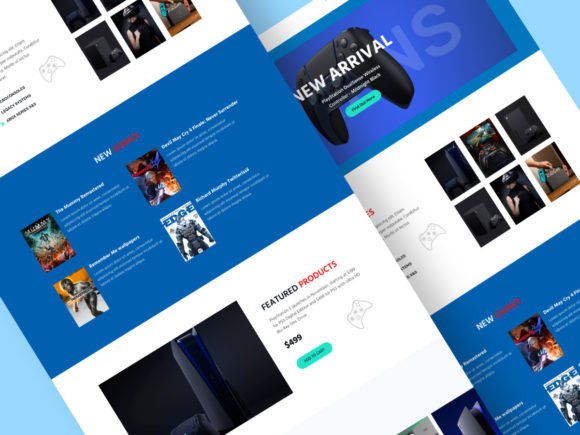
Whether you’re a first‑time builder eager to launch something tonight, a creative professional scouting for your next client foundation, or an educator weaving play into lesson plans, the exploration itself—thoughtful, curious, and practical—sharpens what your website becomes. So open up that design, study the way it handles mobile menus and article cards, and start making it yours. The community you want to reach is waiting, and a solid gaming home online makes that connection immediate.