Typography Gaming Mug Design: Where Bold Lettering Meets Playable Art for the Modern Creator Economy
The intersection of gaming culture and typographic artistry has given rise to a compelling design category that is reshaping how independent creators, print-on-demand entrepreneurs, and established brands approach merchandise. At the center of this movement sits the Typography Gaming Mug Design — a concept that transcends simple word art by fusing gamer vernacular, bold letterforms, and product-ready formatting into a single, versatile asset. For anyone navigating the fast-paced world of custom apparel, drinkware, and lifestyle accessories, understanding why this design format matters is no longer optional. It is becoming essential to staying competitive in a market where visual identity and production speed often determine commercial success.
What Typography Gaming Mug Design Actually Means in a Professional Context
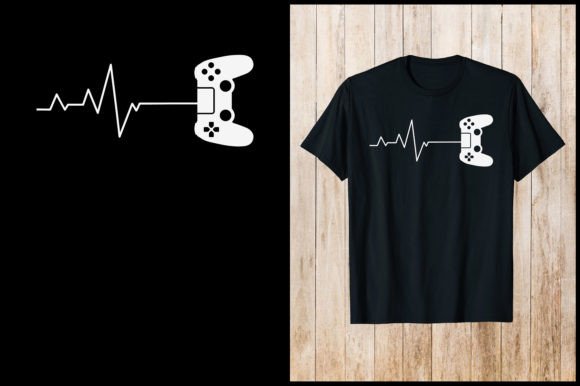
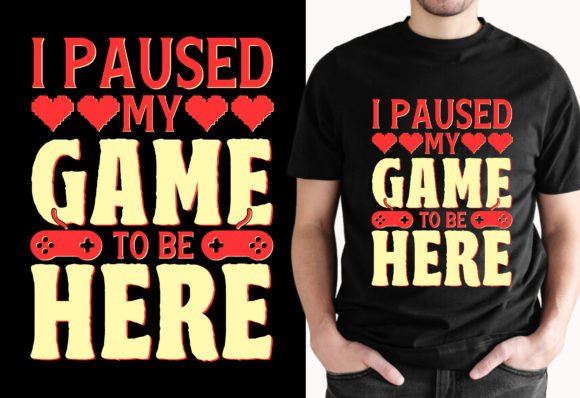
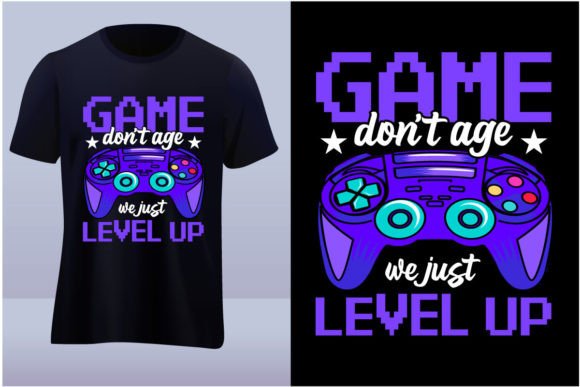
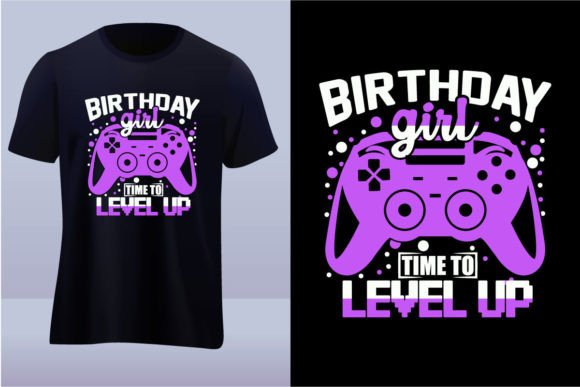
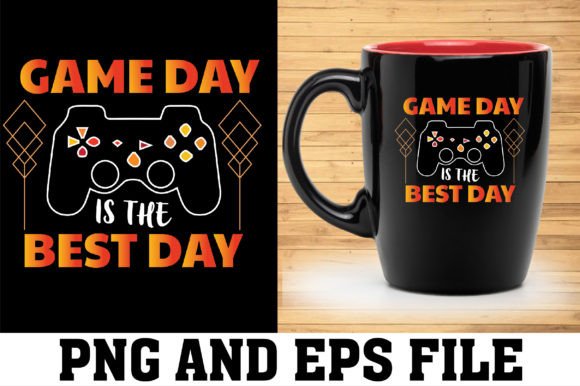
When designers and print specialists refer to a Typography Gaming Mug Design, they are not simply talking about a catchy phrase slapped onto a coffee cup. The term describes a carefully structured design file — typically delivered in EPS and PNG formats — that has been engineered for maximum compatibility across multiple printing surfaces and color environments. The gaming element brings a specific aesthetic vocabulary: references to popular titles, controller iconography, pixel-inspired lettering, clan tag stylings, and competitive gaming slang. The typography component ensures that these visual elements are rendered with precise kerning, scalable vector integrity, and a hierarchy that reads clearly whether printed on a curved mug surface or stretched across a T-shirt chest.
What elevates this design category is its dual nature. It functions as both a creative expression and a technical tool. The availability of source files in AI or EPS format means that the end user inherits full editorial control. Color palettes, stroke weights, and even individual letterforms can be adjusted without degradation. This is not a flattened raster image locked into a single configuration — it is a living design that adapts to the creator's specific production requirements.
The Broader Shift Toward Design Asset Flexibility
To appreciate why the Typography Gaming Mug Design has gained traction, it helps to look at the larger transformation occurring across the creative and manufacturing landscapes. The rise of print-on-demand platforms has democratized product creation, allowing anyone with an internet connection to launch a branded merchandise line without holding inventory. But this democratization has also introduced a new set of demands. Creators now require design files that can transition seamlessly between clothes printing — like T-shirts — mugs, necklaces, canvas, and more products without requiring extensive reworking for each application.
The traditional workflow of commissioning a separate design for each product type is increasingly viewed as inefficient and cost-prohibitive. Instead, savvy entrepreneurs seek out designs that come prepared for multi-surface application from the start. A single Typography Gaming Mug Design might be applied to a ceramic mug in the morning, recolored for a dark T-shirt by afternoon, and scaled down for a pendant necklace by evening — all without leaving the source file environment.
Why Color Adaptability Has Become Non-Negotiable
One of the most practical features that professionals look for — and one that defines quality in this space — is the ability to easily change color for a dark T-shirt or white T-shirt. This is not a minor convenience. It reflects a fundamental production reality: what looks striking on a white cotton background can disappear entirely on a black garment if the design lacks contrast adaptability. Design files that offer 100 color changeable configurations solve this problem at the source. Instead of manually creating inverted or alternate versions, the user can toggle between colorways with a few clicks, preserving both time and design consistency.
This level of flexibility speaks directly to the needs of small-batch producers and large-scale fulfillment operations alike. For the independent creator fulfilling orders through a garage setup, having a ready to print file eliminates the friction of late-night Photoshop adjustments. For the automated fulfillment center processing thousands of orders daily, standardized yet adaptable files reduce error rates and speed up throughput. The Typography Gaming Mug Design, when properly constructed, serves both ends of this spectrum without compromise.
Gaming Culture as a Persistent Commercial Force
Understanding the commercial staying power of gaming-themed designs requires looking beyond the surface-level popularity of video games. Gaming has evolved into a full-fledged lifestyle identity for a significant portion of the global population. Esports tournaments fill arenas. Streaming personalities command audiences that rival traditional celebrities. Gaming terminology has infiltrated everyday language, and the visual codes of gaming — pixel art, achievement badges, health bars, loading icons — have become recognizable even to people who do not actively play.
This cultural saturation creates a sustained demand for merchandise that reflects gaming identity. But the demand has matured. Early gaming merchandise often relied on literal representations: screenshot art, logo reproductions, character portraits. Today's consumers, particularly those in the 18–35 demographic with disposable income, gravitate toward more sophisticated expressions. They want designs that signal their gaming affiliation without shouting it. Typography accomplishes this beautifully. A mug featuring a cleverly kerned phrase like "Respawn in Progress" or "GG EZ" in a refined typeface becomes a badge of identity that functions in professional and social settings alike.
From Niche Interest to Mainstream Merchandise Strategy
The Typography Gaming Mug Design sits at the crossroads of this cultural shift and the practical needs of merchandise production. It acknowledges that the modern gaming enthusiast is not a monolithic archetype. Some prefer minimalist designs that only fellow players will recognize. Others want bold, graphic statements that dominate the product surface. The typographic approach accommodates both preferences through typeface selection, layout density, and compositional balance — all variables that remain editable when source files in AI or EPS format are provided.
For marketers and brand strategists, this adaptability translates into broader audience reach. A single design concept can be subtly tailored for different demographic segments by adjusting visual weight, color temperature, or textual references. The design becomes a platform rather than a fixed product, and that platform thinking aligns with how successful merchandise brands operate in an era of micro-targeting and rapid trend cycles.
Workflow Integration and Production Readiness
Creators who have spent years navigating the technical challenges of print production understand that a beautiful design on screen does not always translate to a beautiful product in hand. File format, color mode, resolution, and layer organization all play critical roles in the final output. This is where the specification of receiving EPS and PNG files becomes meaningful rather than merely technical.
The EPS (Encapsulated PostScript) format preserves vector data, meaning the design can be scaled to any size without pixelation. This is essential when the same design needs to work on a small pendant necklace charm and a large canvas wall print. The PNG format provides a raster alternative with transparency support, ideal for quick mockups, web previews, and applications where vector compatibility is not required. Together, these two formats cover the vast majority of production scenarios a creator will encounter.
When a provider advertises that a design is ready to print, the implication extends beyond file format. It suggests that the design has been tested for common production pitfalls: thin lines that might disappear in screen printing, colors that fall outside printable gamuts, text sizes that become illegible at small scales. Professional designers who create Typography Gaming Mug Design assets with production in mind account for these factors proactively, saving downstream users from costly misprints and frustrating redesign cycles.
The Practical Value of 100 Color Changeable Configurations
The claim of 100 color changeable configurations warrants closer examination because it addresses a specific production challenge that many newcomers overlook. Printing on different substrates — ceramic, cotton, polyester, canvas, metal — produces different color results even with identical ink values. A deep navy blue that looks rich on a white mug might appear muddy on a natural canvas tote. A neon green that pops on a black T-shirt could become garish on a white background. By providing extensive color variation capability within the source file, designers empower end users to fine-tune output for each specific product and substrate combination.
This capability also supports brand alignment. A streamer with established channel colors can quickly adapt any Typography Gaming Mug Design to match their brand palette. A small business running seasonal promotions can shift designs into holiday colorways without commissioning new artwork. The flexibility reduces dependency on external designers and accelerates time-to-market — two advantages that compound significantly for operators managing large product catalogs.
Multi-Product Application as a Strategic Advantage
The most successful print-on-demand stores and merchandise brands rarely limit themselves to a single product type. They build ecosystems around design themes, offering customers multiple ways to engage with a visual identity. A design that resonates on a mug should also work on a T-shirt, necklace, canvas, and more products. Achieving this coherence across diverse product formats is not automatic. It requires designs that have been conceived with dimensional awareness — understanding how a composition reads when wrapped around a cylindrical mug versus when it lies flat on a rectangular canvas.
Typography Gaming Mug Designs occupy an interesting position in this multi-product strategy. Typographic compositions, by their nature, tend to be more adaptable than illustrative designs. Text can be rearranged, reflowed, or resized without losing its essential character. A horizontal arrangement that suits a mug might be restacked vertically for a tall canvas print. A compact lockup that works on a necklace pendant can be expanded into a full-back T-shirt graphic. The source file in AI or EPS format makes these adaptations technically feasible, but the design's underlying typographic structure makes them aesthetically coherent.
Real-World Scenarios and Use Cases
Consider a freelance graphic designer serving multiple clients in the esports and streaming space. One client needs team-branded mugs for a tournament giveaway. Another wants matching T-shirts for a live event. A third requests canvas prints for a streaming room backdrop. Without adaptable design assets, the designer would need to create — or purchase — separate files for each application, potentially introducing visual inconsistencies across the client's brand presence. With a well-constructed Typography Gaming Mug Design that is possible and easy to change color for a dark T-shirt or white T-shirt, the designer maintains a single source of truth while delivering varied outputs. The efficiency gain is measurable in both time saved and client satisfaction improved.
Another scenario involves a small business owner who runs a weekend market stall selling handmade goods. The product range includes printed mugs, tote bags, framed canvas prints, and laser-engraved necklaces. Each product requires different file preparation, yet the core design theme — gaming typography — remains constant. Access to EPS and PNG files that are ready to print across all these applications means the business owner can focus on sales and customer engagement rather than wrestling with file conversion software at midnight before a market day.
Typography as a Bridge Between Gaming Subcultures and Broader Audiences
There is a subtle sophistication in using typography as the primary vehicle for gaming-themed design. Typography communicates tone before the viewer even processes the words. A sleek sans-serif treatment with wide tracking evokes a futuristic, competitive gaming atmosphere. A rough, distressed serif might reference fantasy RPG aesthetics. Pixel-based letterforms connect directly to retro gaming nostalgia. This typographic vocabulary allows the Typography Gaming Mug Design to function as a cultural signifier that operates on multiple levels simultaneously.
For the gaming insider, the typeface choice alone might signal affiliation with a specific genre, era, or community. For the casual observer, the same design reads simply as attractive lettering on a quality product. This dual readability expands the commercial potential of each design beyond the core gaming demographic. Gift buyers who know little about gaming but recognize aesthetically pleasing merchandise become part of the addressable market. The typography-first approach widens the funnel without diluting the core appeal.
Future-Proofing Through Source File Ownership
The emphasis on receiving source files in AI or EPS format reflects a growing sophistication among design asset consumers. There was a time when purchasing a design meant accepting whatever file the seller chose to provide. Today's professional buyers understand that owning editable source files is a form of insurance against future needs that cannot be anticipated at the time of purchase. A design bought for mug production today might need modification for a completely different application two years from now. Without source files, the buyer faces the expensive prospect of recreating the design from scratch or tracking down the original creator — who may no longer be available.
This consideration is particularly relevant for businesses building long-term brand identities. A Typography Gaming Mug Design that becomes central to a product line represents accumulated brand equity. The ability to refresh, recolor, or reformat that design over time — without starting over — protects that equity and allows the brand to evolve organically. The 100 color changeable capability and editable source files transform the design from a one-time purchase into a lasting business asset.
Making Informed Choices in a Crowded Design Marketplace
The growing popularity of gaming typography designs has naturally led to a proliferation of options, not all of which meet professional standards. Discerning buyers look beyond preview images to evaluate the technical specifications that determine real-world usability. Key indicators of quality include clear statements about file formats provided, explicit confirmation of vector source file availability, and transparency about color editability. When a seller specifies that their Typography Gaming Mug Design includes EPS and PNG files, supports clothes printing like T-shirts, mugs, necklaces, canvas and more products, and offers ready to print output with extensive color customization, they are signaling an understanding of professional production requirements.
For the end user — whether a solo entrepreneur launching a first merchandise collection or an established brand expanding into gaming-adjacent products — these specifications translate directly into operational efficiency and product quality. The design files become reliable tools rather than unpredictable variables in the production chain. And in a competitive market where margins are often thin and customer expectations are high, that reliability makes a tangible difference to the bottom line. The Typography Gaming Mug Design, when executed with professional rigor, represents far more than an attractive graphic. It is a production-ready asset engineered for the realities of modern merchandise creation — flexible, adaptable, and built to perform across every surface where gaming culture meets everyday life.