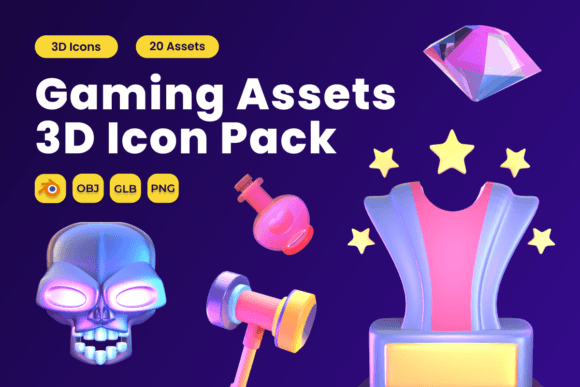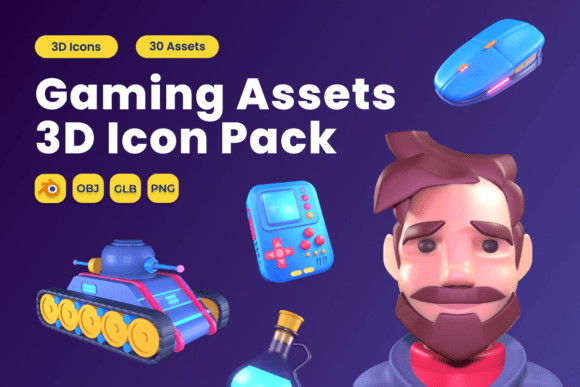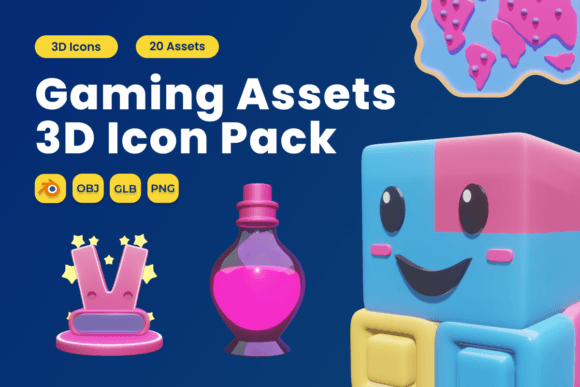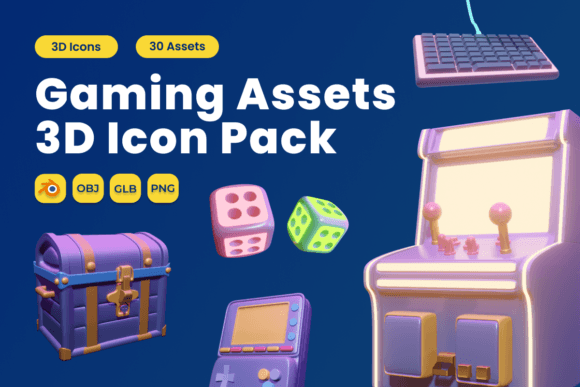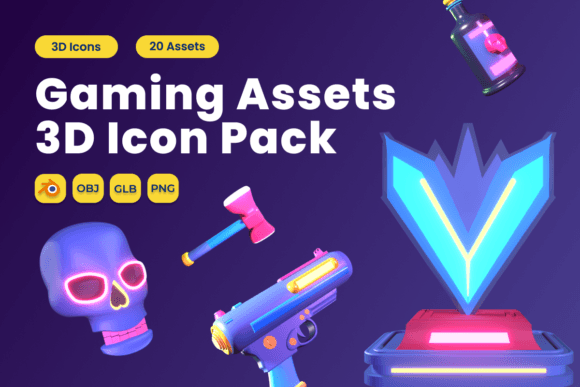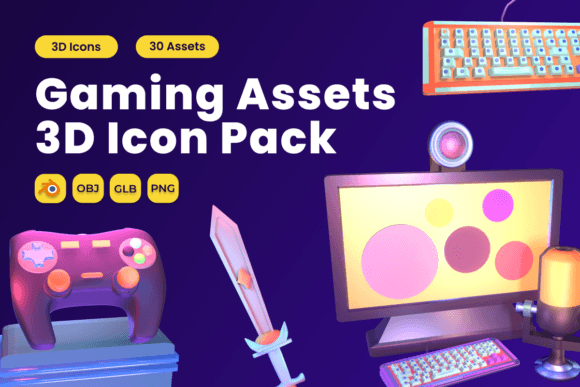
Gaming Asset 3D Icon Pack Vol 5: Evaluating a Premium 3D Asset Collection
For designers, developers, and content creators working within the gaming ecosystem, visual assets are a fundamental component of effective communication. Among the many resources available, 3D icon packs offer a specific blend of aesthetic appeal and practical utility. Gaming Asset 3D Icon Pack Vol 5 represents a focused entry in this category, providing a curated set of thirty 3D icons themed around video games. Understanding its composition, strengths, and inherent tradeoffs is crucial for professionals comparing options for their projects.
What Constitutes Gaming Asset 3D Icon Pack Vol 5?
The pack is a digital collection of thirty distinct icons, each modeled and rendered in three dimensions. The theme is explicitly gaming-centric, encompassing representations of common gaming concepts, hardware, and in-game symbols. The provided file formats—BLEND, OBJ, GLB, and PNG—indicate a multi-purpose approach. The BLEND file is native to Blender, a popular open-source 3D suite, offering full access to the underlying mesh, materials, and lighting for advanced users. OBJ is a widely compatible 3D model format usable in numerous applications from game engines to CAD software. GLB is the binary version of glTF, a modern format optimized for web and real-time 3D applications. Finally, the PNG files offer pre-rendered, rasterized versions for immediate use in digital or print media.
This multi-format delivery is a defining characteristic of Gaming Asset 3D Icon Pack Vol 5. It moves beyond being merely a set of static images by granting access to the actual 3D data. This allows for significant customization: colors can be altered, textures modified, or the models integrated directly into 3D scenes and interactive projects. The inclusion of the source BLEND file is particularly notable for those who wish to tweak the assets or study the modeling techniques.
Key Distinctions and Practical Comparisons
When evaluating such a pack against the broader market of design assets, several dimensions of comparison emerge. The primary alternative categories are 2D icon packs (often in SVG or PNG format) and more comprehensive 3D asset libraries that might include environments, characters, or full scenes, not just icons.
Depth Versus Simplicity: The 3D vs. 2D Tradeoff
A 2D icon pack, typically featuring flat, vector-based designs, offers immediate simplicity and often smaller file sizes. These are ideal for UI/UX design, web graphics, or print where a clean, minimalist aesthetic is required and where integration speed is paramount. Gaming Asset 3D Icon Pack Vol 5, by virtue of being 3D, introduces visual depth, lighting effects, and a more tactile, object-like feel. This can make interfaces or marketing materials feel more dynamic and immersive. However, this comes with a tradeoff: the 3D files require more specialized software to manipulate fully, and the pre-rendered PNGs may be less flexible for scaling than vector graphics. For a developer creating a game's menu system needing flat, fast-loading UI elements, a 2D set might be more appropriate. For a YouTuber creating high-impact video thumbnails or a designer crafting a promotional website for a 3D game, the dimensional quality of this pack could be more impactful.
Scope and Specialization: Niche vs. Broad Libraries
Another consideration is scope. Gaming Asset 3D Icon Pack Vol 5 is specialized and finite: thirty gaming icons. Larger, subscription-based 3D marketplaces offer thousands of models across every conceivable category. For a project needing a diverse range of non-gaming assets—furniture, vehicles, nature elements—a broader library would be necessary. The strength of a specialized pack like this is its coherent theme and consistent quality. All icons are designed to visually belong together, creating a unified aesthetic without the user needing to curate from a vast, potentially stylistically inconsistent catalog. This makes it a efficient solution for projects strictly focused on gaming communication where consistency is valued over sheer volume.
Evaluating Use Cases and Project Fit
The decision to use Gaming Asset 3D Icon Pack Vol 5 hinges on the specific requirements of a project and the user's technical workflow.
Strong Fit Scenarios
This pack is a compelling option for several realistic scenarios. Indie game developers with limited 3D modeling resources could use the OBJ or GLB files to populate their game's UI elements or as in-world holographic displays. The GLB format is particularly suited for web-based game portals or interactive showcases built with frameworks like Three.js. Marketing agencies tasked with promoting a gaming product could leverage the high-quality PNGs for social media campaigns, website banners, or printed promotional materials, where the 3D render provides a premium, attention-grabbing look. Content creators, such as streamers or gaming reviewers, could use the icons to enhance their video overlays, channel art, or presentation slides. Furthermore, the inclusion of the BLEND file makes this pack a viable learning resource or customization base for 3D artists interested in gaming icon design.
Limitations and When to Seek Alternatives
There are clear situations where this pack may not suffice. If a project requires hundreds of unique icons, the thirty provided here will be insufficient. Similarly, if the required iconography falls outside the gaming theme—needing business, finance, or medical symbols—this pack is obviously not relevant. The reliance on 3D software for full customization (Blender for the BLEND file, or other tools for OBJ/GLB) can be a limitation for teams or individuals who exclusively work in 2D design suites like Adobe Photoshop or Illustrator. For them, only the PNG files are directly usable, forfeiting the key advantage of the 3D data. In such cases, a high-quality 2D gaming icon pack with vector formats might offer more practical flexibility.
Decision Factors for Professional Selection
When comparing asset packs, professionals should weigh several factors beyond just theme and price.
- File Format Utility: Does your workflow support BLEND, OBJ, or GLB? If you only need static images, the PNGs might be enough, but you lose future customization potential.
- Stylistic Consistency: Does the pack's specific 3D style—its color palette, lighting approach, and modeling detail—align with your project's existing visual language?
- Scope of Need: Are thirty gaming-themed icons precisely what you need, or is your requirement more generalized or expansive?
- Technical Overhead: Are you prepared to handle 3D file formats, which may require specific software and skills, compared to the simpler integration of 2D vectors?
Gaming Asset 3D Icon Pack Vol 5 occupies a specific niche: it is a premium, specialized collection offering both ready-to-use images and the underlying 3D models for deeper work. Its value is highest for those who can exploit the multi-format delivery, particularly the 3D source files, and whose projects are centrally focused on gaming themes. For broader needs, simpler integration, or non-gaming contexts, other categories of assets will likely be more suitable. By carefully assessing project requirements against these practical dimensions, designers and creators can make a more informed choice about whether this pack represents the right resource for their current objectives.